
An Ice Storm Can Cut Power for Days. Will Your Data Come Back?
Most Oklahoma offices have a battery box under a desk and a server in a closet. Nobody tests either one until the power goes out. By then it is too late to find out the battery lasts five minutes and the last good backup is three weeks old.
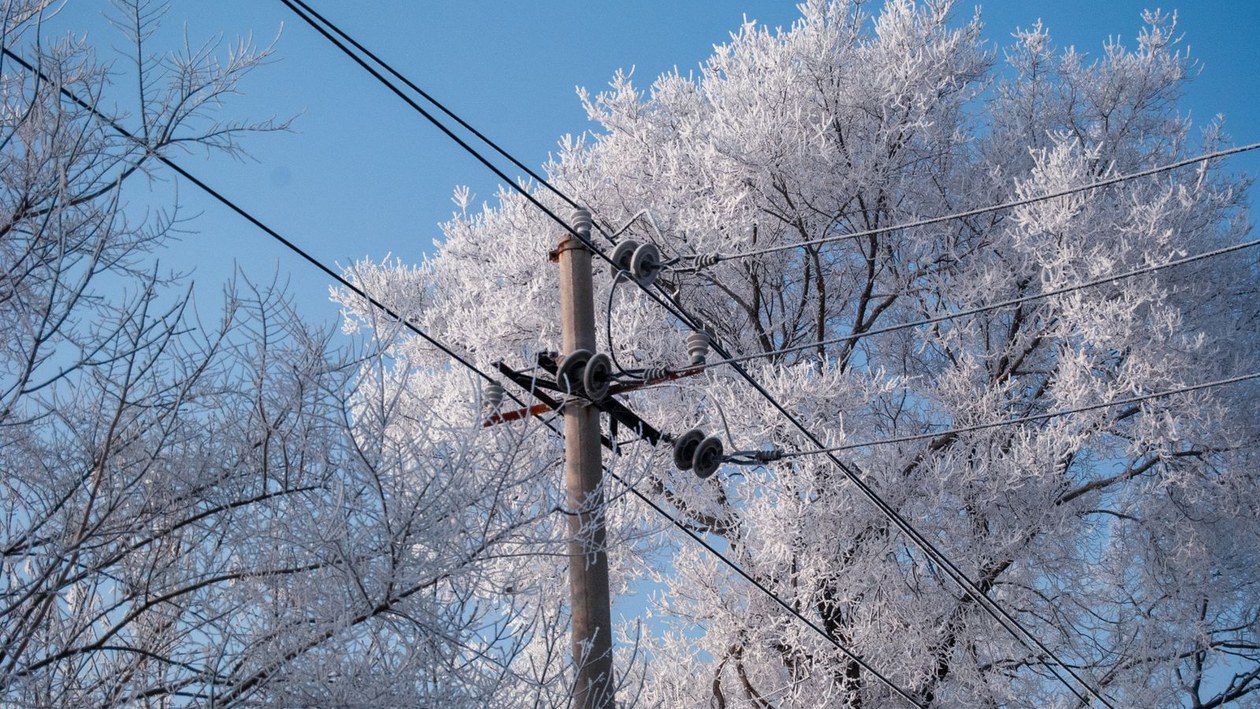
Six years ago this week the lights went out
On October 26, 2020, freezing rain started falling on trees that still had their leaves. Over the next three days it piled up. The National Weather Service in Norman recorded at least an inch and a half of ice in parts of west central and central Oklahoma. More than half an inch covered a wide stretch from Ponca City to Oklahoma City to Lawton to Clinton.
Limbs came down on lines all over the metro. The Weather Prediction Center later wrote that nearly every tree in Oklahoma City had some damage. For any office with a server in a closet, that meant days without the systems the business runs on.
What the evidence says
The Weather Prediction Center review of the storm says more than 375,000 people in Oklahoma were without power at the peak. More than 40,000 of those outages lasted ten days. Oklahoma electric cooperatives estimated more than $26 million in damage. It was also the first ice storm warning ever issued for Oklahoma before Halloween. So the old rule that ice only comes in January does not hold.
Power problems hurt data centers too, not only small offices. Uptime Institute studies outages every year. In its 2026 outage analysis, power was the leading cause of the most recent serious outage reported by operators, at 45 percent in 2025. Battery systems, transfer switches and generators made up most of those failures. The report also notes that even short power cuts can lead to long recoveries while systems restart and data is brought back in sync.
These outages are not cheap. In Uptime's 2025 survey, 57 percent of operators said their most recent major outage cost more than $100,000. About one in five said it cost more than $1 million.
The federal Ready.gov guide for businesses gives the plain version of the plan. List your hardware, software and data. Decide how fast each system has to come back and how much data you can afford to lose. Plan for losing power, cooling and internet, not only the server itself. Back up often, check the backups and test the plan.
Why data gets hurt in a power outage
The battery was never tested
Many offices bought a battery backup years ago and never looked at it again. Batteries wear out. A unit that once gave thirty minutes may now give three. If the server does not shut down cleanly before the battery dies, files and databases can be left half written.
Everything lives in one building
The server is in the closet. The backup drive sits on top of the server. The internet line comes in through the same wall. When the building loses power for a week, the business loses all three at once. A backup in the same room is a copy, not a recovery plan.
Nobody knows what comes back first
When power returns, systems need to be started in the right order. The database before the app. The network before both. If that order only lives in one person's memory and that person is stuck at home behind a fallen tree, the office may sit idle even after the lights are on.
A cloud app is not a full answer
Moving email and files to the cloud helps a lot. But if your sales database, accounting system or reports still run on a server in the office, an outage there still stops the work. Check what is really in the cloud and what is not.
How to get ready before the next storm
- 1List every server, database and report the business needs, and where each one physically lives.
- 2Decide how many hours each system can be down and how much data you can afford to lose.
- 3Test the battery backup under real load and replace old batteries.
- 4Set servers to shut down cleanly when the battery runs low.
- 5If you have a generator, run it on a schedule and test the switch over to it.
- 6Keep at least one copy of your data outside the building, in the cloud or at another site.
- 7Restore a backup to a test machine and time how long it takes.
- 8Write down the start up order and who to call, and keep a printed copy off site.
None of this needs a new data center. Most of it is checking what you already own and writing down what your team already knows. A test restore on a quiet afternoon tells you more than any vendor promise.
What this means if you run a company in Oklahoma
Oklahoma gets ice, tornadoes, straight line winds and floods. A lot of firms here still run key systems on a server down the hall, which is often the right choice for cost and speed. It just means the plan for bad weather has to include the data, not only the staff and the building.
Fall is a good time to do this work. The storms are close enough that people take them seriously and far enough away that there is time to fix what you find.
At Oklahoma Data Partners, we help Oklahoma companies list their systems, test their backups and battery power, move copies of key data off site and write a recovery plan their team can follow. If you are not sure your data would come back after a week without power, book a consultation.
Key takeaway
Oklahoma has seen ice storms leave tens of thousands without power for ten days, and power is the top cause of serious outages in Uptime Institute research. Know what must come back first, test the battery and the restore, and keep a copy of your data outside the building.
Frequently asked questions
Ready to get started?
Would your data come back after a week without power? Book a consultation with Oklahoma Data Partners to test your backups and build a recovery plan before the next storm.
Founder, Oklahoma Data Partners
Don Karlos is a senior data engineer and database specialist who founded Oklahoma Data Partners to give Oklahoma organizations one partner for understanding their data (analytics, dashboards, data engineering) and for hiring the data people behind it. Oklahoma Data Partners is an Oklahoma-based, data-only firm with two equal pillars: data consulting and data talent recruiting. We help organizations stabilize critical databases, build reliable data pipelines, design scalable data architecture, and turn raw information into trusted business intelligence — and we help Oklahoma companies hire the permanent data professionals who keep those systems running.
About Oklahoma Data PartnersData consulting & data talent recruiting · Clean. Structured. Reliable.