
Server Memory Costs More Than Doubled. Tune Your Database Before You Buy.
A slow database often gets a hardware answer. This year that answer costs a lot more. Many slow SQL Server systems are held back by settings, a handful of heavy queries or edition limits that new hardware will not fix.
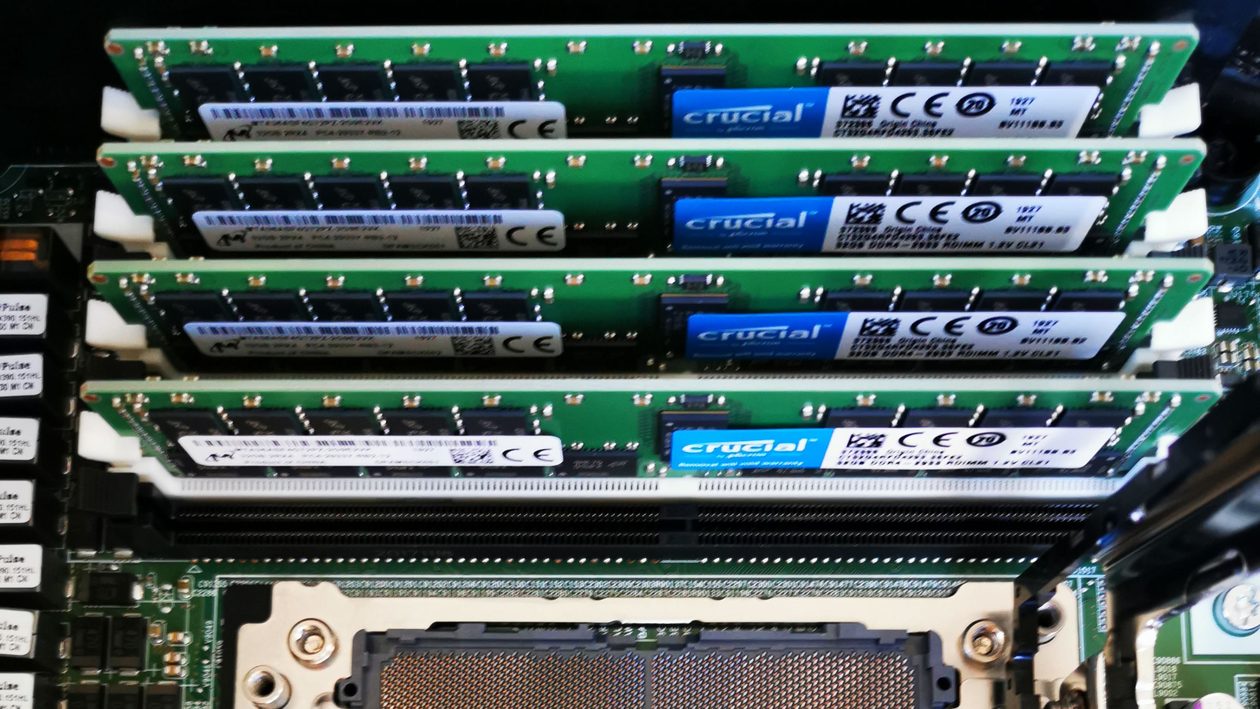
The budget line that says new server
It is budget season at a lot of Oklahoma companies. Somewhere in the 2027 plan there is a line for a new database server because reports are slow and the old box is maxed out. Last year that line might have passed without much debate.
This year the same server costs a lot more, and the extra memory you planned to buy may not even get used. Before that money goes out the door, it is worth an honest look at what the server you already own is doing all day.
What the evidence says
In its October 21 forecast, Gartner said data center demand pushed memory prices to more than double over the past 12 months. Gartner said those cost increases are moving through storage, servers and networking too, and that it expects high memory prices to last through 2027 before hardware prices begin to settle.
Gartner expects worldwide spending on data center systems to rise 55.5 percent in 2027 after a 73.8 percent jump in 2026. Spending on cloud infrastructure services is expected to grow 25.7 percent in 2027. Cloud providers pay for the same memory, so moving the problem to the cloud does not make it cheaper by default.
Closer to home, the Oklahoma State Treasurer's September report put annual consumer inflation at 3.7 percent and warned of continued price pressure. That is a hard time to ask for hardware that costs twice what it did a year ago.
Software cost grows with the hardware. Microsoft's published prices for SQL Server 2025 list Standard edition at $3,945 and Enterprise edition at $15,123 for each two core pack. Under the core model you license every physical core, with at least four per processor, or every virtual core, with at least four per virtual machine. Adding eight Standard cores comes to $15,780 at list price before any hardware.
Why the server looks too small
The memory setting was never changed
Microsoft says the default for max server memory is 2,147,483,647 MB, which in practice means no limit. Microsoft recommends setting a limit in every version, starting near 75 percent of the memory not used by other programs. A server left on the default can starve Windows and anything else running on it, which looks a lot like a server that needs more memory.
A few queries do most of the work
On many systems a short list of queries does a large share of the work. Microsoft says Query Store keeps a history of queries, their plans and their run times, and can show the top queries by CPU, reads or memory over any window you pick. Query Store is on by default for new databases starting with SQL Server 2022, but it is off by default in 2016, 2017 and 2019, which many Oklahoma shops still run.
A plan changed and nobody noticed
SQL Server picks a plan for each query, and that plan can change after a statistics update or a new index. Microsoft says Query Store can force the earlier, faster plan without any change to the application. A report that got slow last month may need that fix, not a new server.
The edition caps what new hardware can do
Microsoft's edition pages say the buffer pool, the main cache for data, tops out at 128 GB per instance on SQL Server 2022 Standard and 256 GB on SQL Server 2025 Standard. Standard 2025 is also limited to 32 cores, up from 24 in 2022 and earlier. Buy past those limits on Standard and much of the extra hardware sits idle.
More memory is not always more speed
If you run SQL Server Standard, check your version's buffer pool limit before you buy memory. If you add cores, add the license cost to the quote. A server bought without those two checks can cost more and run no faster.
What to check before you approve a new server
- 1Write down your SQL Server version, edition and how many cores are licensed today.
- 2Check the max server memory setting and set a limit if it is still on the default.
- 3Turn on Query Store for your busiest databases and let it collect at least a couple of weeks of normal work.
- 4Pull the top queries by CPU and by reads and fix the worst few with better indexes or rewrites.
- 5Look at wait stats in Query Store. Microsoft notes that heavy disk read waits often point to a missing index and heavy CPU waits often point to a plan change or a missing index.
- 6Compare your memory and core plans with your edition limits before you ask for quotes.
- 7Measure again after the fixes. If the server is still short, buy for the numbers you now have, not for a guess.
What this means if you run a company in Oklahoma
If your company watches IT spending closely, this is the year it pays off. A few weeks of tuning costs far less than a server bought at peak memory prices, and it gives you real numbers if you still need to buy.
At Oklahoma Data Partners, we work only on data and only in Oklahoma. We help companies find what is slowing their databases down, fix the settings and queries behind it and size hardware from real measurements. If you want a second set of eyes before you sign a server quote, book a consultation.
Key takeaway
Memory prices more than doubled in a year and are expected to stay high through 2027. Check settings, find the heavy queries and confirm your edition limits before you budget for a bigger SQL Server box.
Frequently asked questions
Ready to get started?
Planning a 2027 server purchase? Book a consultation with Oklahoma Data Partners and find out what your current SQL Server can do before you buy.
Founder, Oklahoma Data Partners
Don Karlos is a senior data engineer and database specialist who founded Oklahoma Data Partners to give Oklahoma organizations one partner for understanding their data (analytics, dashboards, data engineering) and for hiring the data people behind it. Oklahoma Data Partners is an Oklahoma-based, data-only firm with two equal pillars: data consulting and data talent recruiting. We help organizations stabilize critical databases, build reliable data pipelines, design scalable data architecture, and turn raw information into trusted business intelligence — and we help Oklahoma companies hire the permanent data professionals who keep those systems running.
About Oklahoma Data PartnersData consulting & data talent recruiting · Clean. Structured. Reliable.