Your Tractor Collects Farm Data. Who Gets to Keep It?
Precision farming tools make records automatically. That is the point. The catch is that the records often land in someone else's system first, and the rules for getting them back, sharing them or deleting them are written in contracts few growers read.
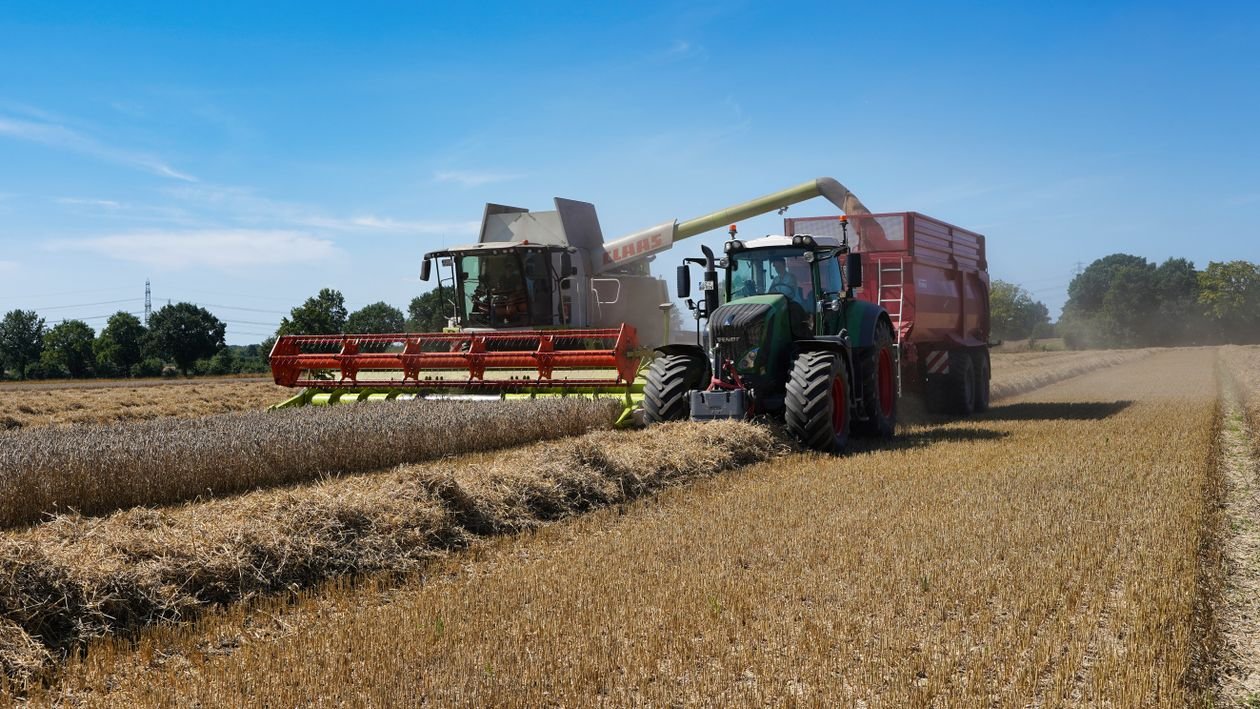
Every pass across the field leaves a record
A modern combine logs yield by the foot. A planter records seed rates and depths. A sprayer notes what went where and when. Soil probes, drones and livestock tags add more. Over a few seasons, a farm builds a detailed history of its own ground.
That history has real value. It guides seed and fertilizer choices, supports a loan request, helps settle a crop insurance claim and shapes the price of a land deal. The question many growers never ask is where that history actually lives and who else can use it.
What the evidence says
The National Agricultural Statistics Service released its farm technology survey in August 2025. It found that 22 percent of Oklahoma farms used precision agriculture practices to manage crops or livestock in 2025, up from 18 percent in 2023. The survey counts GPS guidance, yield monitoring and soil mapping, variable rate applications, drones and electronic tagging. Oklahoma had about 70,000 farms in 2024, and 87 percent of Oklahoma farms had internet access in 2025.
The Government Accountability Office studied precision agriculture in report GAO 24 105962. It listed farm data sharing and ownership issues as one of the main challenges holding back wider use. It also found that farmers often do not trust the ways farm data are collected and managed, and suggested that data terms be simple, transparent and accountable.
A University of Florida IFAS Extension paper titled Who Owns and Controls Farming Data explains why. It says US law classifies farm data as facts, and facts lack the creative element needed for copyright protection. In the authors' words, legally speaking, farmers do not own the raw data generated from their land. The paper concludes that contracts between farmers and technology providers are the primary legal documents that decide how farm data is owned, controlled and shared.
The same paper cites a 2014 American Farm Bureau Federation survey in which 81 percent of farmers and ranchers believed they owned their data and 77 percent worried about data security. Out of that concern came a set of industry principles, now kept by the Ag Data Transparent group. Its updated core principles say farmers should own information that comes from their operations, should be able to retrieve their data in a usable format and should be told if their data will be used to train machine learning or AI models. Those principles are voluntary. Members are asked to strive to put them in their contracts.
Why farm data slips out of the farmer's hands
The terms come with the equipment
Data agreements usually arrive as a screen on a display or an app sign up. They are accepted in the shop or the cab, often by whoever set the machine up, and rarely reviewed again when they change.
Data is split across brands
A farm with a green tractor, a red combine and a third party sprayer may have records in three separate clouds. Each has its own export format and its own rules. Pulling a full picture together takes work most operations never get to.
Many people touch the same field
Landowners, tenants, custom harvesters, agronomists and co ops can all generate or view data about the same acres. Without clear agreements, nobody is sure who may share what.
Aggregated does not mean gone
Many agreements let a provider keep data after it has been made anonymous or combined with other farms, even after you leave. Check whether you can opt out of that use and what happens to your records if the company is sold.
How to keep control of your farm data
- 1List every machine display, app and service that collects data from your operation.
- 2Read the data terms for each one and note who can use, share, sell or keep your records.
- 3Look for how you can export your data, in what format and how quickly.
- 4Export your yield, planting and application records at the end of each season and store a copy you control.
- 5Ask whether your data is used to train machine learning or AI models and whether you can say no.
- 6Put data rights in writing with landowners, tenants and custom operators.
- 7Keep your own records in one place where you can compare years and fields across brands.
None of this requires walking away from the tools. Precision equipment pays for itself on many operations. The point is to make sure the records it creates keep working for you no matter which dealer or software you use next year.
What this means if you run a company in Oklahoma
Oklahoma farms and ranches are adopting precision tools at a steady clip, and many ag businesses around them do the same. Co ops, custom harvesters, input dealers and farm lenders all handle grower data now. Each of them benefits from clear rules on what data they hold and how growers can get it back.
A grower who keeps a clean copy of their own records walks into a lender meeting, a lease talk or a land sale with stronger footing. A business that serves growers and treats their data with care earns trust that is hard for competitors to match.
At Oklahoma Data Partners, we help Oklahoma farms and ag businesses pull records out of separate systems, store them in one place they control and set clear rules for who can use them. If your operation is collecting data you cannot easily reach, book a consultation.
Key takeaway
Raw farm data is treated as facts under US law, so contracts decide who controls it. Read the data terms on every machine and app, export your records each season and keep your own copy.
Frequently asked questions
Ready to get started?
Farm records spread across apps and equipment clouds? Book a consultation with Oklahoma Data Partners to bring your data together in a place you control.
Founder, Oklahoma Data Partners
Don Karlos is a senior data engineer and database specialist who founded Oklahoma Data Partners to give Oklahoma organizations one partner for understanding their data (analytics, dashboards, data engineering) and for hiring the data people behind it. Oklahoma Data Partners is an Oklahoma-based, data-only firm with two equal pillars: data consulting and data talent recruiting. We help organizations stabilize critical databases, build reliable data pipelines, design scalable data architecture, and turn raw information into trusted business intelligence — and we help Oklahoma companies hire the permanent data professionals who keep those systems running.
About Oklahoma Data PartnersData consulting & data talent recruiting · Clean. Structured. Reliable.